Alone Together: How Odajima Hitoshi's Most Withdrawn Work Became a Lifeline for Lonely Listeners
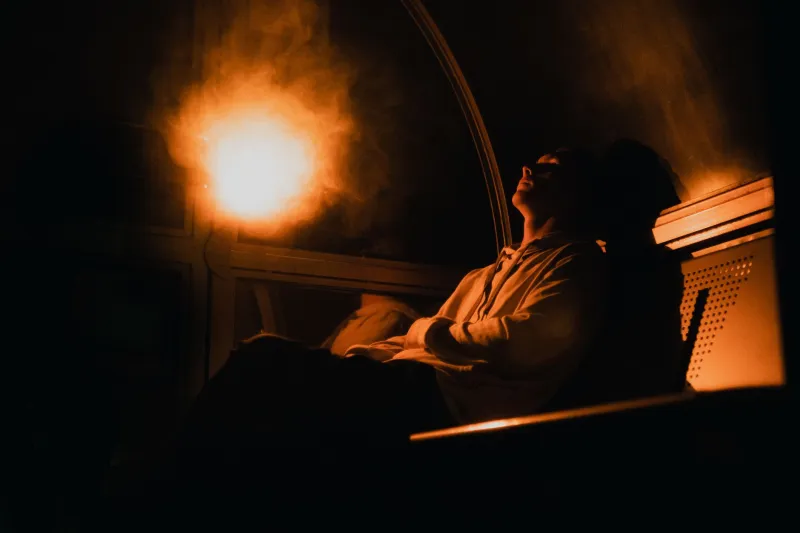
There's a playlist floating around on Spotify — curated by a college student in Portland, Oregon — titled simply "for when nobody gets it." Every track on it is Odajima Hitoshi. No context, no explanation, just his name repeated across the tracklist like a quiet answer to a question she hadn't figured out how to ask yet.
That playlist has been shared more times than she expected. She told a fan forum she made it during a stretch when she felt genuinely invisible. And somehow, music made by a Japanese artist during what fans describe as his most withdrawn creative phase was the thing that made her feel less so.
That's the paradox at the heart of Odajima Hitoshi's most compelling work: the more alone he sounds, the less alone his listeners feel.
The Silence Has Shape
When artists talk about their "isolated periods," they usually mean something dramatic — a breakdown, a breakup, a hermit-like disappearance from public life. With Odajima, it's quieter than that. His most introspective phases don't announce themselves. They just show up in the texture of the work: longer pauses, sparser arrangements, lyrics that feel like journal entries that were never meant to be read out loud.
Fans who've followed his catalog closely will recognize what we're talking about. There are stretches in his output where the production pulls back almost entirely — where the space between notes starts carrying as much weight as the notes themselves. It's the kind of music that doesn't fill a room so much as it reveals how big the room actually is.
For listeners in the US, where the cultural default is bigger, louder, and more — where even "chill" playlists are engineered to keep you engaged — this kind of restraint hits differently. It doesn't ask anything of you. It just sits with you.
What Fans Say They're Actually Looking For
Spend any time in Odajima Hitoshi fan spaces — Reddit threads, Discord servers, the comment sections on YouTube uploads — and a pattern emerges pretty fast. People aren't just saying they like the music. They're explaining what it does for them.
"I put it on when I can't explain what I'm feeling," one commenter wrote under a fan-uploaded track. "It's like he already translated it."
"There's no performance to it," said another. "He's not trying to make you feel better. He's just honest about feeling bad. And weirdly that's more comforting."
This distinction matters. A lot of music marketed toward emotional listeners is aspirational — it's trying to lift you somewhere, resolve the tension, bring you to a cathartic finish line. Odajima's most austere work doesn't do that. It stays in the difficult place alongside you. And for a generation of listeners who've grown up being told to "pivot" and "reframe" and "find the silver lining," that refusal to rush toward resolution feels almost radical.
Authenticity in an Age of Noise
We live in a media environment that is, to put it generously, exhausting. The average American is bombarded with content designed to provoke, engage, and retain. Algorithms reward the extreme, the emotional, the immediately gratifying. In that context, work that is genuinely quiet — that doesn't compete for your attention so much as it waits for you to arrive — stands out in a way that's hard to manufacture.
Odajima Hitoshi's withdrawn phases produce exactly that kind of work. And listeners, particularly younger ones who've developed a finely tuned radar for anything that feels performed or calculated, recognize it immediately.
There's no viral hook. There's no drop. There's no moment engineered to make you screenshot the lyric and post it. There's just someone working something out in real time, and an invitation — never a demand — to witness it.
In 2025, that's almost a luxury. Call it the loneliness premium: the rare, genuine emotional cost of making something truly without armor, and the unexpected value it delivers to the people who encounter it.
The Geography of Isolation
It's worth noting that loneliness in America has its own particular texture. Surgeon General advisories. Epidemic-level statistics. A cultural mythology built around rugged individualism that makes it weirdly shameful to admit you're struggling with connection. Americans have a complicated relationship with admitting they're lonely — even to themselves.
Odajima Hitoshi's music sidesteps that shame entirely. Because it's arriving from outside American cultural context, it doesn't carry the same freight. There's no implicit judgment baked into it, no social script you're expected to follow in response. You can receive it without having to perform your feelings about receiving it.
Fans in cities like Chicago, Austin, and Seattle — places with dense populations and paradoxically high rates of reported social isolation — have been particularly vocal about this. The music reaches them in the gaps between the noise. On the train at 11pm. In the apartment after a party that left them feeling emptier than before they went.
When Withdrawal Becomes Connection
Here's the thing about Odajima Hitoshi's most solitary creative periods: they produce work that is, in a strange way, deeply social. Not in the sense of being communal or participatory, but in the sense of being addressed. Even at his most withdrawn, there's a quality to his work that suggests he knows someone is listening. That he's making something for a specific kind of quiet that he trusts you'll recognize.
And listeners do. Across language barriers, across cultural contexts, across the enormous geographic and experiential distance between a Japanese artist's private creative process and a college student in Portland building a playlist at midnight — the work travels. It lands.
That's not a small thing. In a world that's constantly asking us to be more connected, more visible, more engaged, there's profound relief in finding something that meets you in your withdrawal rather than trying to pull you out of it.
Odajima Hitoshi's most isolated work doesn't promise to fix the loneliness. It just confirms that someone else has been there too. And sometimes — often, actually — that's exactly enough.
Want to explore more of Odajima Hitoshi's catalog? Head over to our Artist Spotlight archives for a full breakdown of his creative phases and the work that defines each one.