Steal These Habits: 5 Creative Principles from Odajima Hitoshi That American Artists Need Right Now
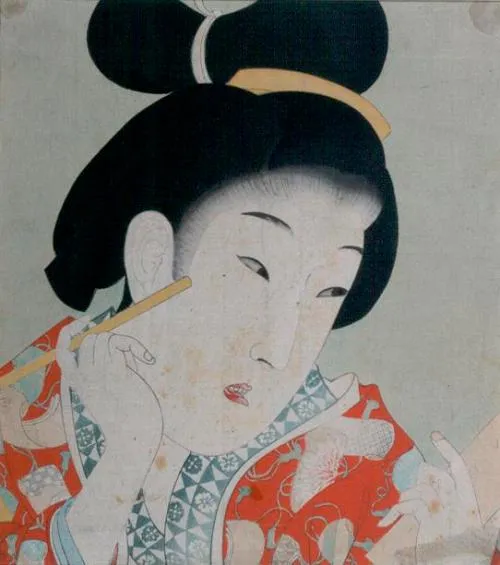
Photo: Unknown artistUnknown artist, Public domain, via Wikimedia Commons
Let's be honest — the American creative landscape is noisy right now. Every platform is screaming for content, every algorithm is demanding consistency, and every artist is being told to "find their niche" while simultaneously "thinking outside the box." It's exhausting, and it's no surprise that so many creators hit walls.
So what if the answer was already out there, just not in English?
Odajima Hitoshi has built a career on a set of creative principles that are equal parts disciplined and deeply human. His work spans music, visual art, and performance — and the through-line across all of it is a methodology that American artists across every medium could genuinely benefit from studying. Not copying. Studying.
Here are five lessons worth taking seriously.
Lesson 1: Embrace the Power of Restraint — Less Really Is More
American creative culture tends to celebrate maximalism. More production value, more content, more everything. Odajima Hitoshi operates from the opposite instinct. One of the most consistent hallmarks of his work is a willingness to leave space — to let a note fade without immediately filling the silence, to let a visual breathe without overcrowding the frame.
This comes from the Japanese concept of ma, which roughly translates to the meaningful use of negative space and pause. It's not emptiness for its own sake — it's the idea that what you don't include shapes the impact of what you do.
How to apply it: Next time you're finishing a track, a design, or a script, go back and ask yourself what you can remove without losing the core message. Resist the urge to add another layer. Sit with the discomfort of open space and see if the work doesn't actually hit harder for it. American audiences are more responsive to this than the industry gives them credit for — think of the moments in film or music that genuinely gut-punch you. More often than not, it's a moment of stillness, not noise.
Lesson 2: Process Is Sacred — Document Everything
Odajima Hitoshi is famously meticulous about his creative process. Sketches, notes, voice memos, discarded drafts — he keeps it all. Not out of sentimentality, but out of a deep respect for the journey that leads to finished work. In interviews and through his shared creative materials, he's made it clear that the "failed" attempts aren't failures at all. They're the map.
American creators, especially in the age of social media, tend to share only the polished end product. There's a pressure to appear effortlessly successful, which creates a weird culture where the messy, essential middle part of making something gets hidden.
How to apply it: Start keeping a creative journal — analog, digital, whatever works for you. Log your dead ends as carefully as your breakthroughs. Revisit old drafts regularly. You'll often find that something you abandoned six months ago is exactly what a current project needs. The process isn't a detour to the destination. It is the destination, half the time.
Lesson 3: Cross-Pollinate Obsessively — Borrow From Outside Your Genre
One reason Odajima Hitoshi's work feels so distinctive is that he refuses to stay in one lane. His musical sensibilities inform his visual art. His theatrical instincts shape his approach to song structure. He moves fluidly between disciplines and brings each one's logic into the others.
American artists often get siloed — musicians study music, designers study design, and rarely do the two collide with any real intention. But the most exciting creative work tends to come from people who are voraciously curious outside their primary medium.
How to apply it: Deliberately schedule time each week to engage with art forms outside your own. If you're a musician, go to a gallery. If you're a visual artist, attend a spoken word event. If you're a filmmaker, take a dance class. Don't go looking for direct inspiration — just go looking. Let the cross-pollination happen organically. Odajima's career is proof that this kind of intellectual wandering isn't a distraction from your craft. It's what makes your craft worth experiencing.
Lesson 4: Commit to Long-Form Thinking in a Short-Form World
Here's a hard truth: the TikTok-ification of creative culture rewards speed and virality, not depth. Odajima Hitoshi has never chased trends. His projects often take years to develop, and he's spoken openly about resisting the pressure to release work before it's genuinely ready.
This isn't about being precious or slow. It's about understanding that certain kinds of creative resonance can't be rushed. The work that stays with people — the album that becomes a soundtrack to someone's life, the artwork that ends up on someone's wall for twenty years — almost always came from a creator who was willing to play a long game.
How to apply it: Separate your content output from your serious creative projects. Yes, show up consistently on social media if that's part of your strategy. But also have at least one project running in the background that you're giving real time and real depth. Protect it from the pressure to monetize or publish before it's ready. American audiences are hungry for work that feels complete and considered — there's a massive gap in the market for that right now, and Odajima's approach points directly at how to fill it.
Lesson 5: Stay Rooted — Authenticity Is Your Competitive Advantage
Perhaps the most powerful lesson from Odajima Hitoshi's career is the simplest one: he has never tried to be something he isn't. Even as his work has crossed cultural borders and reached international audiences, it has remained unmistakably, unapologetically his — shaped by his Japanese identity, his specific experiences, his individual perspective.
In American creative culture, there's constant pressure to sand down your edges, to make your work more palatable, more universal, more marketable. The irony is that this process often strips out exactly the things that would make the work genuinely stand out.
How to apply it: Do the uncomfortable work of identifying what is specifically, uniquely yours — your background, your obsessions, your contradictions — and lean into it rather than away from it. The most universally beloved artists, from Kendrick Lamar to Phoebe Bridgers, got there by being radically specific about their own experience. Odajima Hitoshi's international reach didn't come despite his Japanese identity. It came because of it.
The Takeaway
Odajima Hitoshi isn't offering a formula. He's modeling a mindset — one that values depth over speed, authenticity over trend-chasing, and process over performance. For American artists navigating one of the most chaotic creative environments in history, that mindset isn't just inspiring. It's genuinely useful.
The good news? You don't have to figure it out from scratch. The blueprint is already there. You just have to be willing to look a little further than your usual influences.
Welcome to Hitoshi World. This is where that exploration starts.
