Digging Through the Crates: The Hidden Sounds and Ideas That Shaped Odajima Hitoshi's World
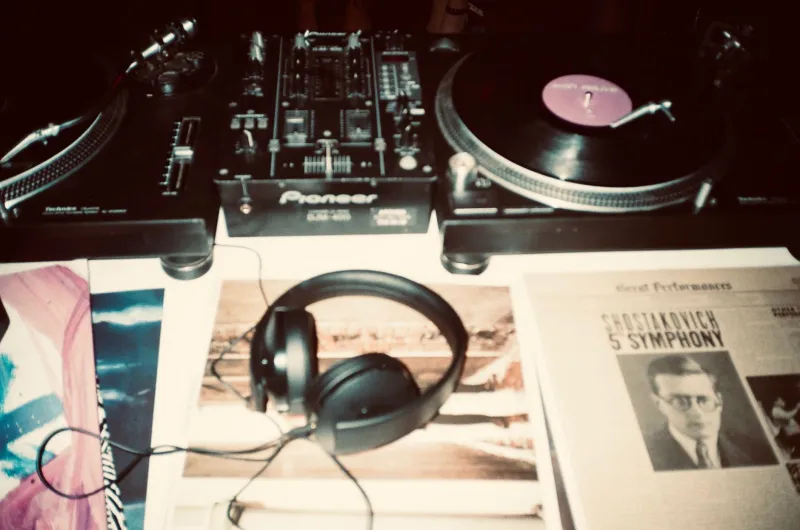
Every great artist is, in some sense, a great listener first. Before you can build something original, you have to absorb — voraciously, promiscuously, across genres and eras and cultural contexts that might seem completely unrelated until suddenly they're not. The most distinctive voices in music are almost always the ones that have digested the widest range of influences and found some unexpected synthesis on the other side.
Odajima Hitoshi is a prime example of this, and for US listeners still early in their discovery of his work, understanding where his sound comes from is like getting a backstage pass to something you've already been loving without fully knowing why.
So let's dig.
The Japanese Aesthetic Foundation: Ma and Wabi-Sabi
You can't talk about Odajima Hitoshi's sonic identity without talking about ma — the Japanese concept of negative space, the meaningful pause, the silence that carries as much weight as the sound surrounding it. This isn't just a compositional technique for him; it's practically a philosophical position.
In Western music production, silence is typically treated as absence — something to be filled, a gap between the real stuff. In the aesthetic tradition that clearly runs through Odajima Hitoshi's work, silence is presence. It's where meaning lives. The breath before the note. The moment after the chord resolves. These aren't empty spaces. They're load-bearing.
Related to this is the concept of wabi-sabi — the Japanese appreciation for imperfection, transience, and the beauty found in things that are incomplete or worn. You can hear this in the way Odajima Hitoshi resists the kind of clinical polish that dominates contemporary production. There's texture in his recordings. Imperfection that feels entirely intentional. A roughness at the edges that makes the whole thing feel more alive, more honest, more real.
For American listeners raised on the hyper-compressed, maximally processed sound of mainstream pop, this can feel disorienting at first. Then it starts to feel like relief.
The Ambient Lineage: From Eno to Hosono
If you want to trace the Western branch of Odajima Hitoshi's sonic family tree, Brian Eno is a reasonable starting point. Eno's foundational work in ambient music — the idea that sound could function as atmosphere rather than foreground, that a recording could be simultaneously engaging and ignorable, present and receding — clearly runs through Odajima Hitoshi's approach to texture and space.
But the more interesting connection, and the one that often gets overlooked by Western commentators, is Haruomi Hosono — the Japanese musician and producer who was doing something remarkably prescient in the late 1970s and 1980s with Yellow Magic Orchestra and his solo work. Hosono was blending electronic production with traditional Japanese musical sensibilities decades before that synthesis became fashionable, creating something that felt simultaneously futuristic and deeply rooted in place. The echo of that project — the willingness to hold those two things together without forcing them to resolve — is audible in Odajima Hitoshi's work in ways that reward close listening.
There's also a thread connecting to Midori Takada, the Japanese percussionist whose minimalist approach to rhythm and space influenced a generation of artists who were paying attention. The patience in that music — the willingness to let a single idea breathe and develop over time rather than rushing toward the next thing — is a quality Odajima Hitoshi shares.
The Philosophical Architecture: Zen and the Art of Not Explaining
Beyond the musical references, there's an intellectual and philosophical current running through Odajima Hitoshi's work that's worth naming directly, even if he might resist the label.
Zen aesthetics — with their emphasis on directness, on the thing itself rather than commentary about the thing, on achieving maximum impact through minimum means — are woven into the fabric of how he constructs music. There's a resistance to explanation in his work that feels very deliberate. He doesn't tell you how to feel. He doesn't signal the emotional moment before it arrives. He trusts the listener to meet the music where it is.
This is genuinely countercultural in the current media environment, where artists are expected to contextualize their work constantly — through social media, through interviews, through the endless apparatus of explanation and personal branding. Odajima Hitoshi largely opts out of that. The work speaks. If you're listening, you'll hear it.
Contemporary Connections: The Producers Who Are Paying Attention
It's worth noting that Odajima Hitoshi's influence isn't just historical — it's actively shaping what's happening in contemporary production right now, including in the US.
The wave of lo-fi and ambient production that became genuinely mainstream in the last decade — the kind of music that dominates study playlists and late-night streaming sessions — owes a significant, often unacknowledged debt to the aesthetic sensibility that artists like Odajima Hitoshi developed and refined. The emphasis on texture over melody, atmosphere over structure, emotional resonance over technical display — these are ideas that have been central to his work for years and that younger producers are now discovering and recontextualizing.
For American listeners who found Odajima Hitoshi through those adjacent sounds, tracing the lineage backward is a genuinely rewarding exercise. You start to hear his work not as a standalone artifact but as part of a long, ongoing conversation — one that crosses cultures and decades and genres in ways that conventional music criticism rarely maps.
Your Starting Points
If you're new to Odajima Hitoshi and want to start building the contextual framework for his sound, here are some adjacent reference points worth exploring:
- Haruomi Hosono's solo work from the late 1970s — particularly his ambient and electronic recordings
- Brian Eno's Ambient 1: Music for Airports — the foundational text of ambient as a genre and a philosophy
- Midori Takada's percussion recordings — for the patience and spaciousness they model
- Traditional Japanese koto music — to hear the melodic and tonal vocabulary that underlies a lot of contemporary Japanese artistic music
None of these are Odajima Hitoshi. But they're all part of the conversation he's been having — and understanding that conversation makes everything he does land a little deeper, a little clearer, and a lot more resonant.
The architecture was always there. Now you know where to look.